
First-party, zero-party and third-party data: what changes for a small publisher
The privacy headlines mostly concern data bought and tracked across other people's websites. A newsletter already sits on the data that matters, because readers hand it over directly.
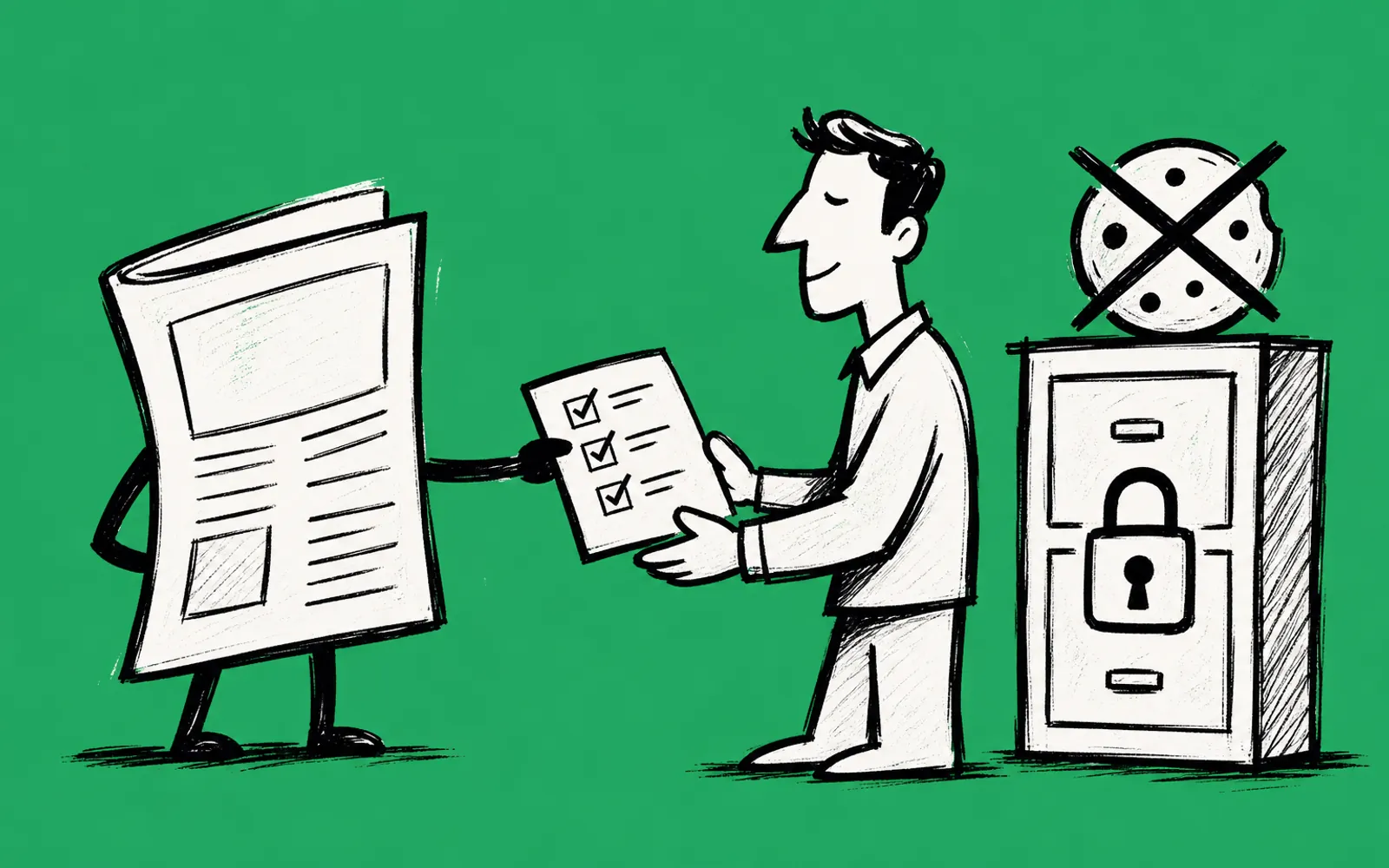

- Third-party data is collected about people on other sites; first-party is what you collect on your own; zero-party is what a reader tells you directly
- A newsletter already collects first-party and zero-party data at every signup
- The signup moment is when a reader pays the most attention, so questions asked there get answered
- Answers a subscriber gives you can be stored on their record and used to segment your list
A one-person newsletter publisher reads another headline about cookies dying or privacy rules changing and wonders whether any of it applies to them. Mostly it does not, in the way the headline implies. The upheaval concerns companies that follow people across websites they do not own and sell what they learn. A newsletter does something different: readers arrive, give an email address on purpose, and answer questions when asked.
In one plain sentence, what actually changes for a small publisher is this: the data that becomes harder and more expensive to buy is exactly the data a newsletter already owns, so the practical move is to collect more of it directly and use it better.
The three kinds, in plain terms
Third-party data is information collected about a person on websites and apps they visit, gathered by a company that is not the site they were using, then sold to advertisers. It is the data behind most cookie headlines. Its value depends on tracking people across properties the tracker does not own, which is the part under pressure.
First-party data is what you collect on your own ground: your signup page, your website, your emails. An email address, open behavior, clicks, and anything a subscriber does inside your newsletter are all first-party because the relationship is with you.
Zero-party data is a subset worth naming on its own: what a person tells you directly and deliberately. Their town, whether they own a home, whether they run a business, what they want to hear about. A survey answer, where the reader chose to give it, is zero-party data. It is the most accurate kind because nobody inferred it, and the most useful because the reader volunteered it.
Why a newsletter is already in a strong position
A newsletter's whole model runs on data readers give willingly. Nobody subscribes by accident. That means the publisher starts with a consented, first-party relationship, and every question asked at signup is a chance to add zero-party facts to it. The moment after someone subscribes is when you have more of their attention than you will ever get again, and most newsletters spend it on a thank-you message and nothing else.
The scale of this can be small and still matter. A local newsletter adding 250 new subscribers a month is adding 250 chances to learn a town, a homeowner status and an interest, facts that an advertiser or sponsor asks about first. None of that has to be bought from anyone. It gets collected one signup at a time, on ground the publisher owns, from readers who chose to be there.
We run more than 20 local newsletters. Every new subscriber used to get a welcome email and nothing else. That's the moment they pay the most attention, and we were wasting it.
How to act on data readers give you directly
- 01Write down what you would segment on
Pick the handful of facts that would change what you send: town, homeowner or renter, parent, business owner, interests.
- 02Put the questions right after signup
Ask on the page a new subscriber lands on, while attention is at its peak, rather than in an email they may never open.
- 03Keep it short and branching
A few questions, with each answer deciding what comes next, so readers only see questions that apply to them.
- 04Sync answers to the subscriber record
Store each answer as a field on the subscriber in your email platform, so you can segment sends on it later.
- 05Use the segments within a week
Send one email split by a real answer, such as homeowners versus renters, and compare the response before building more.
What this does not mean
Collecting data directly does not mean collecting everything. A short survey at signup earns answers because it is short and the reason for asking is obvious. A long interrogation trains readers to abandon. The facts worth having are the ones you can act on this month, and no others.
It also does not require heavy technical work on the publisher's side. Form and survey tools sit beside the email platform you already send from, capture the answers, and write them back as fields. The publisher's job is deciding what to ask and what to do with the segments that result.