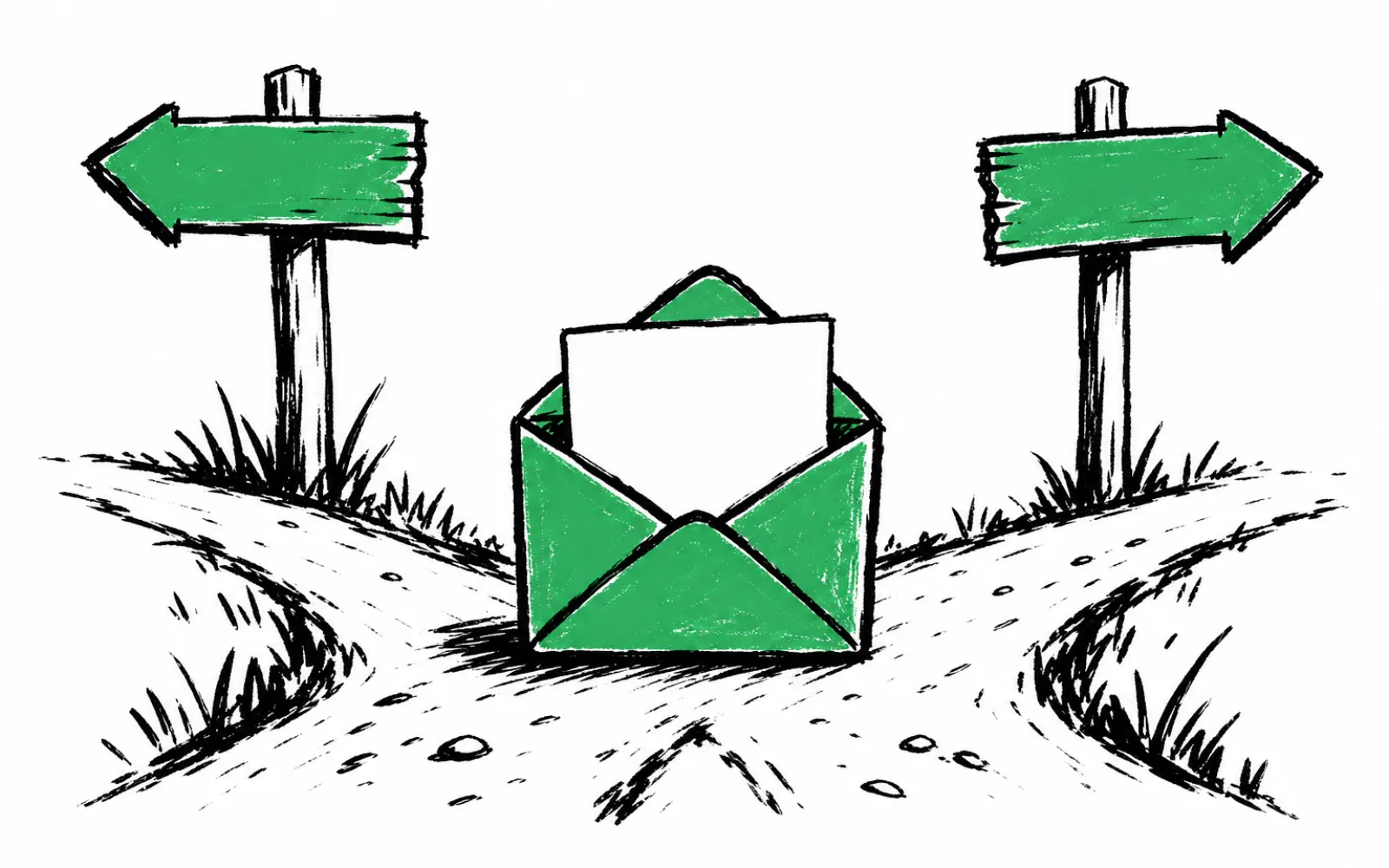

What should happen immediately after someone subscribes to your newsletter?
A practical post-subscribe sequence for collecting useful audience data, routing relevant offers, and creating revenue before the welcome email arrives.
 TJ LarkinBuilds greetform at 8th replayUpdated August 26, 2026 · 7 min read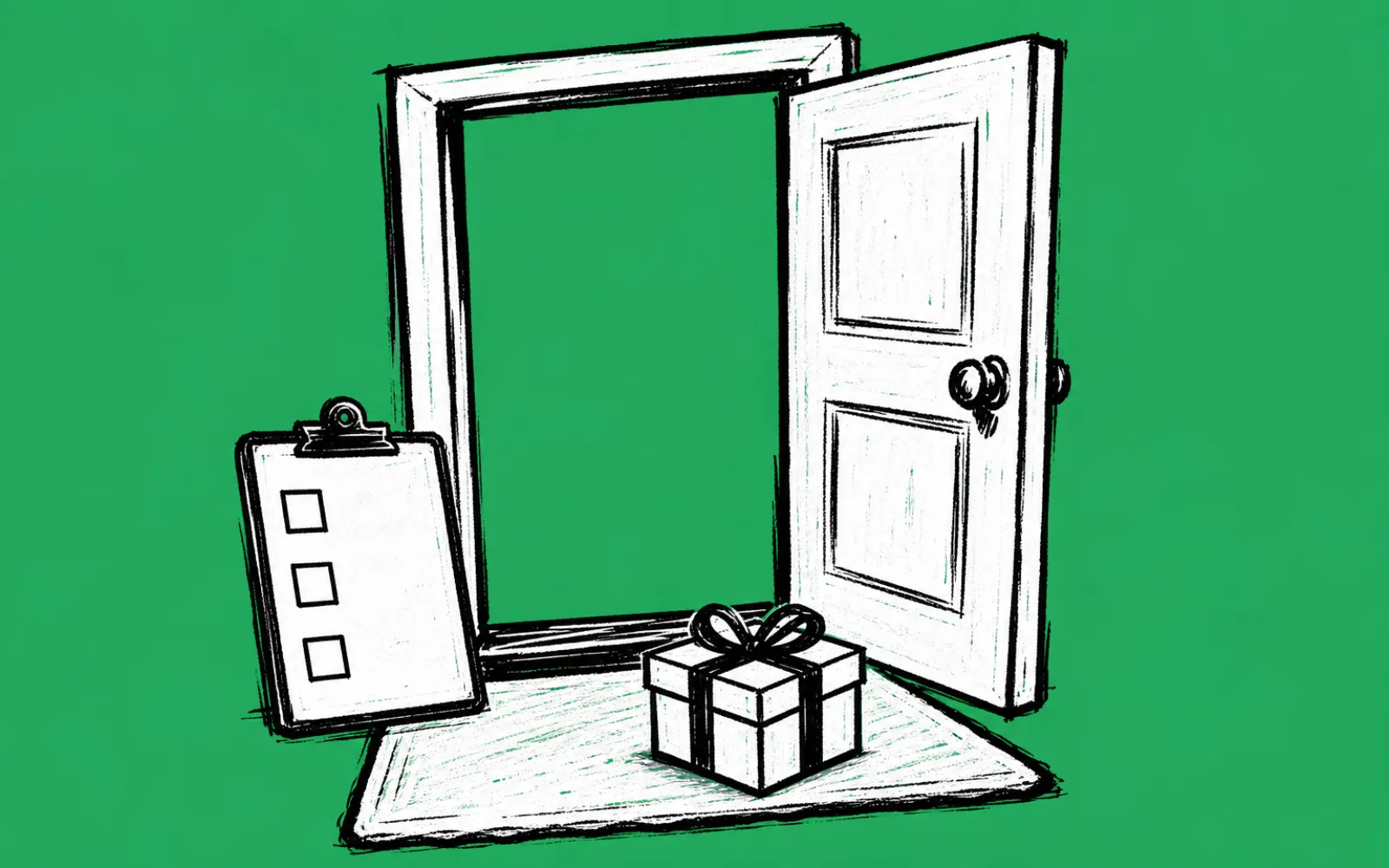
- The moment right after signup is the highest-attention moment a newsletter gets from a new reader. Most confirmation pages waste it.
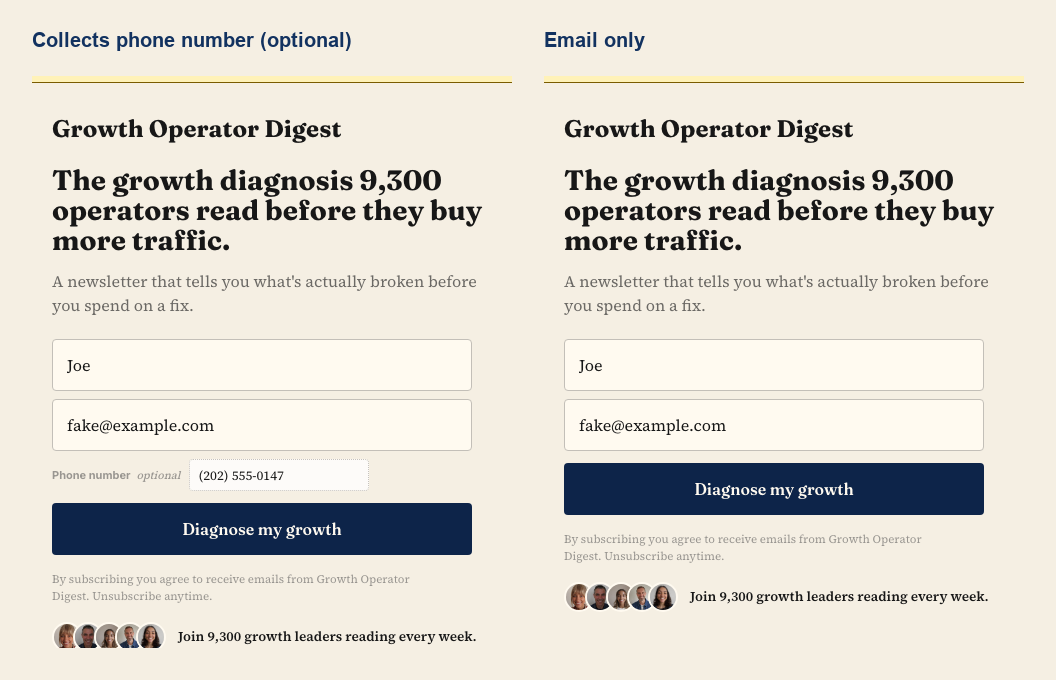
- Keep the email signup form itself minimal. Ask segmentation and monetization questions after the subscription already succeeded.
- Ask only questions that change something real: the next question, a segment, an offer, or a lead route.
- The five-part sequence is confirm, learn, branch, route, record. The welcome email still matters, but it has a different job.
After the email signup succeeds, confirm the subscription, ask one to three questions that change what you do next, route the subscriber to one relevant action, record the outcome, and then let the welcome email continue the relationship. Do not overload the initial signup form, and do not turn the next screen into a random coupon wall.
The subscriber has already said yes. That changes the job.
Most newsletter operators treat the confirmation page like a receipt. The reader sees a generic thank-you message, closes the tab, and waits for an email. That wastes the only moment when the reader has just taken an intentional action and is still paying attention to the publication.
The five-part post-subscribe sequence
- 01Confirm
Tell the reader the newsletter signup worked before asking for anything else.
- 02Learn
Ask one to three questions that affect segmentation, content, membership, sponsors, or offers.
- 03Branch
Use the answer to decide the next question or eligible action instead of showing everyone the same screen.
- 04Route
Present one primary next action, such as a paid membership, owned product, event, advertiser lead page, or relevant offer.
- 05Record
Save the answers and offer events, sync the useful fields, and separate clicks from real leads or purchases.
Ask questions only when the answer changes something
A post-subscribe survey is not valuable because it contains a lot of questions. It is valuable when an answer changes content, an offer, a sponsor package, a membership pitch, a sales follow-up, or the data stored in the newsletter platform.
| Question | What it changes |
|---|---|
| Which town or ZIP code do you live in? | Local coverage, geographic offers, events, and future segmentation. |
| What are you most interested in? | Content tags, sponsor categories, and the next question. |
| Do you own a business? | Media-kit routing, advertiser interest, and business-owner follow-up. |
| Would you consider a paid membership? | Membership offer, benefit explanation, or research list. |
| What are you trying to buy, solve, or plan? | Owned product, advertiser, event, or service routing. |
The offer should feel like the next useful step
A random offer wall trains readers to skip. A strong post-subscribe offer is connected to the publication, the answer, or the reason the person subscribed. A local-events reader can see an event or attraction. A business owner can request the media kit. A coach's subscriber can see the right course or consultation. A legacy publisher can present paid membership while intent is high.
- Lead with one primary action before presenting optional secondary offers.
- Explain why the offer is relevant to the answer the reader gave.
- Keep lead capture on a trusted, branded page when possible.
- State who receives the information before the subscriber submits it.
- Track impressions, clicks, completed leads, and purchases as different events.
The welcome email still matters. It simply has a different job.
The post-subscribe flow handles the immediate moment. The welcome email introduces the editorial promise, sets expectations, asks the reader to reply or whitelist the sender, and begins the longer relationship. Improving one does not require ignoring the other.
Measure the funnel without pretending every click is revenue
- 01Started
The subscription succeeded and the post-subscribe flow loaded.
- 02Completed
The subscriber reached the end of the questions.
- 03Offer seen
The relevant card or final offer was actually displayed.
- 04Clicked
The subscriber opened the next action.
- 05Converted
The lead, membership, booking, sale, or other defined outcome happened.
The goal is not a pretty completion rate in isolation. The goal is to learn which audiences, questions, and offers create accepted business value without damaging subscriber trust.
What this guide checked
- greetform example library
Current examples of branching, offer routing, and subscriber journeys.
- SparkLoop subscriber quality guide
Independent current guidance emphasizing contextual welcome flows for referred subscribers.
Questions people ask
Should I ask questions on the initial newsletter signup form?
How many post-subscribe questions should I ask?
Should every newsletter show an offer wall?
TJ Larkin builds software for local media at 8th replay, the company behind greetform, larkfeed and lightbreak. He and his team run more than 20 local newsletters, and greetform started as the form they built for their own readers.